
Barriers to Living Permaculture: Social Capital, Labor, and Cultural Design
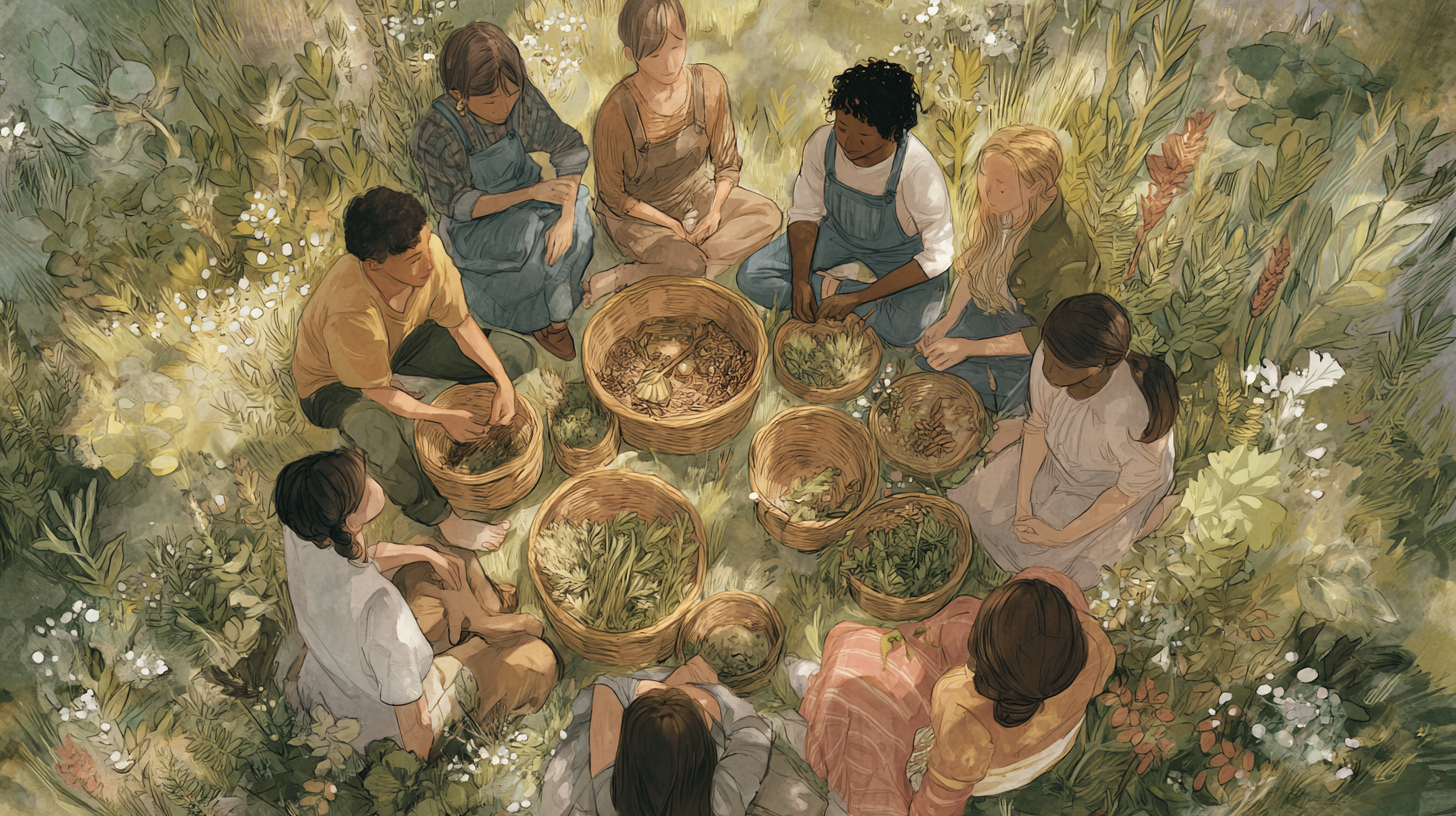
Permaculture is often presented in images of lush food forests, integrated animal systems, and vibrant communities gathered around shared abundance. Yet the reality for many practitioners, students, and even teachers is more complicated. Knowledge of permaculture principles does not automatically translate into a fully realized permaculture site. Barriers of capital, labor, social support, and cultural context shape what is possible.
This article explores those barriers and considers how we might design systems of resilience that extend beyond the land and into community culture.
Structural Barriers
- Financial Control and Access
Even when individuals are committed to regenerative design, access to land, tools, and capital may be outside of their control. Household dynamics, unequal power distribution, or reliance on external funding can prevent implementation. A permaculture design is not just an ecological plan—it is also an economic one. - Labor and Teamwork
Permaculture systems require physical work. Establishing perennial systems, building infrastructure, and maintaining diversity are not one-person tasks. Where supportive teams are absent—whether due to family obligations, disability, or social isolation—the labor requirements become a significant barrier. - Isolation and Lack of Social Capital
Many aspiring practitioners lack a local support network. Caregiving responsibilities, geographic distance, or cultural marginalization can result in social isolation. Without community ties, individuals may struggle to share tools, labor, or even encouragement.
Why Acknowledging This Matters
Permaculture is not only about landscapes; it is about relationships. If we overlook the social and structural barriers people face, we risk turning permaculture into an exclusive pursuit available only to those with money, free time, or supportive partners. By naming these realities, we open the door to solutions that make permaculture more inclusive and accessible.
Strategies for Greater Access
- Incremental Design
Encourage small, attainable projects—balcony gardens, community plots, guilds in suburban backyards—that allow practitioners to embody permaculture principles without the need for full homesteads. - Community Infrastructure
Develop tool libraries, seed banks, cooperative land trusts, and shared workdays. These structures distribute the costs of labor and resources. - Networks of Support
Formal and informal networks can connect isolated practitioners with others who share their values. These may be in the form of permaculture guilds, mutual aid groups, or online learning communities that extend beyond geography. - Cultural Design
Permaculture must extend its lens from “land use” to “cultural use.” Designing rituals, gatherings, and systems of reciprocity is as critical as designing swales or food forests. Culture is the soil in which resilient communities grow.
Toward Resilient Community Culture
If permaculture is to fulfill its promise, it must be more than technical design. It must be a framework for cultivating cultures of resilience—where individuals, families, and ecosystems are supported in reciprocity.
Designing landscapes without designing supportive community culture leaves practitioners vulnerable to isolation and burnout. Conversely, designing resilient culture strengthens the foundation for ecological abundance.
The task before us is not only to plant trees and design systems, but to weave networks of care and support that allow those trees, and those who plant them, to thrive.
Reflection Prompts for Students and Practitioners
-
What barriers—financial, social, or physical—prevent broader access to permaculture in your community?
-
How might we design systems that redistribute access to tools, land, and resources?
-
Who contributes the physical labor in your current or envisioned systems?
-
How can you ensure that labor is shared equitably, and that care work (childrearing, elder care, emotional support) is recognized as part of the design?
-
Where do you currently draw support from (family, neighbors, networks)?
-
Where are the gaps? What might a “guild” of human relationships look like in your own life?
-
What rituals, gatherings, or practices could strengthen resilience in your community?
-
How do we balance honoring traditions with designing new cultural forms that respond to current realities?
-
Where do you feel isolated in your work?
-
What small step could you take this month to build connection or mutual support?
Toward 2026: Living the Questions Together
This article is only a starting point. In September 2026, I will be convening a Social Permaculture Think Tank here on the farm—an immersive gathering focused on invisible structures, cultural resilience, and the inner landscapes of community.
Together, we will explore:
-
Social ecology mapping and governance design
-
Decolonization and anti-oppression in community systems
-
Alternative economies and resource-sharing
-
Inner work, self-care, and trauma-informed facilitation
-
Cultural celebration and co-creation
As part of the event, participants will also collaborate on a legacy build: a natural-material fire circle and gathering space designed to host future community events on the land.
If these questions speak to you, stay tuned for more details—or join the FarmSchool newsletter to be among the first to hear updates as we shape this gathering.